
A more simple question might be: what don’t we do?
“Speech & Language Therapist” (or “SaLT”) is actually quite a bad job title! When we think of a Speech Therapist, we might picture a kind person working with children who stutter or can’t say the word “yellow”. This is SO inaccurate – and a bit of a disservice to my brilliant children and young people colleagues!
It also overlooks the whole part of the profession that works with adults.
From people recovering from a stroke, to professionals with voice problems affecting their work, to people who have difficulties with eating and drinking, there are all sorts of reasons why you might benefit from seeing a Speech & Language Therapist.
Have a look below at some of the areas where we might be able to support you.
Click on the arrows for more information.
Speech & Language

To be fair, helping people with speech and language difficulties is a big part of what we do.
For lots of different reasons, such as following a stroke or with the onset of a degenerative disease, you can know exactly what you want to say, but it doesn’t come out the way you want it to. The muscles we use for speaking might not be as strong as they used to be, or they might not move in the way we’re used to. This can make speech sound slurred, quiet or monotonous.
This SPEECH problem is called dysarthria. Another speech problem, called apraxia of speech, can also make it difficult to get the words out, but for a different reason.
These conditions can also affect the parts of the brain responsible for language. You might know the message you want to get across, such as “I’m thirsty” or “I need the toilet” but have difficulty finding the right words to express yourself. Sometimes the words come out perfectly clearly, but don’t make sense. Or you know exactly what you mean, but just can’t find the words to say it.
This LANGUAGE problem is called aphasia.
Voice
Millions of people in the UK could be described as “professional voice users”. These are people who rely on their voice to do their job – including teachers, lawyers, call centre workers and even Speech & Language Therapists!
Millions more rely on their voices to socialise, chat to friends and communicate every day. So, what happens when your voice stops working as it should?
Whether it is caused by overuse, strain or a medical condition, many people find themselves with voice difficulties. Their voice might sound hoarse, quiet or breathy, or it might even disappear altogether.
You don’t have to lose your voice completely before it’s worth getting some help.
This VOICE problem is often called dysphonia.

Transgender Voice
For some trans people, their voice or way of communicating might not feel like it fits with how they see themselves. For some people, their voice will change naturally as part of medical transition, while for others it might not change in the way they would like.
A Voice Specialist Speech & Language Therapist can work with you to look at your voice and the way you communicate, and help you find ways of using your voice that feel more comfortable and natural to you.
We can work on things like pitch, resonance, intonation and the way you use your voice, while making sure you are using it in a healthy and sustainable way.
Eating & Drinking
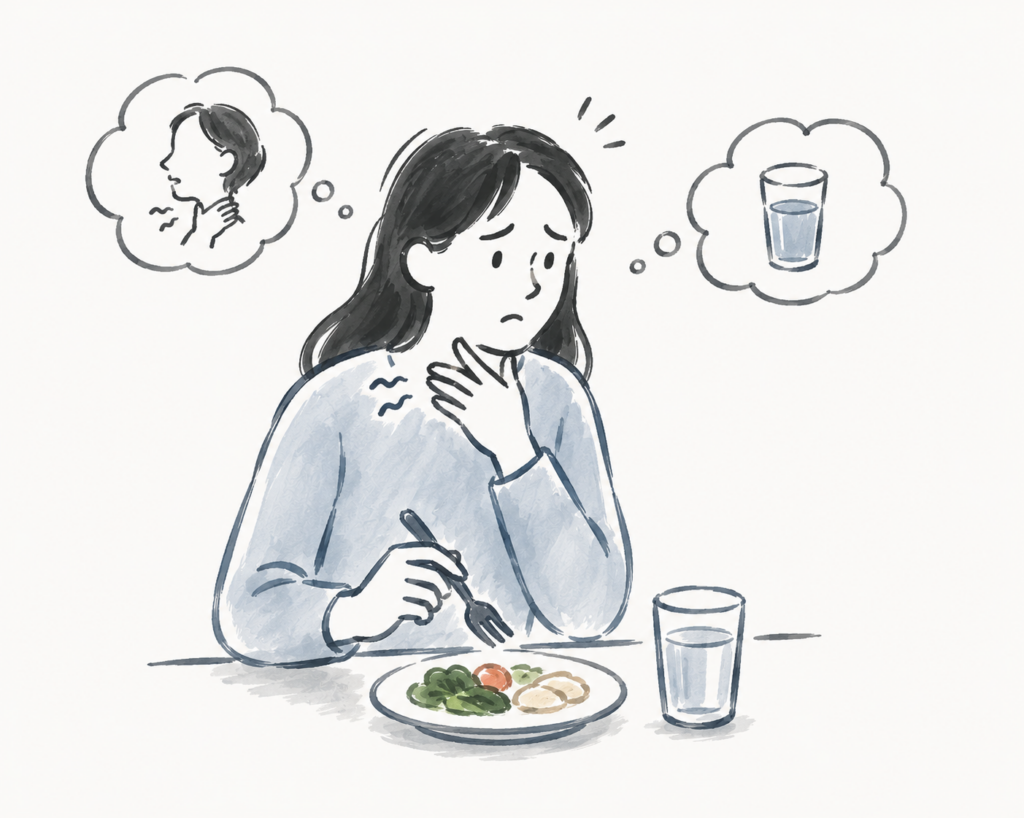
Not many people realise that Speech & Language Therapists with the right postgraduate training can assess and support people with eating and drinking difficulties. If the problem is happening before the food or drink gets into your stomach, an SLT can probably help!
Eating and drinking difficulties can happen for lots of different reasons, including muscle weakness or problems with muscle control following a stroke, changes in eating habits following dementia, cancer treatment, or even anxiety.
These difficulties can affect your ability to chew food, control food and drink in your mouth, or get the swallow started. They can also make eating and drinking feel less safe or enjoyable.
This EATING & DRINKING or swallowing difficulty is called dysphagia.